
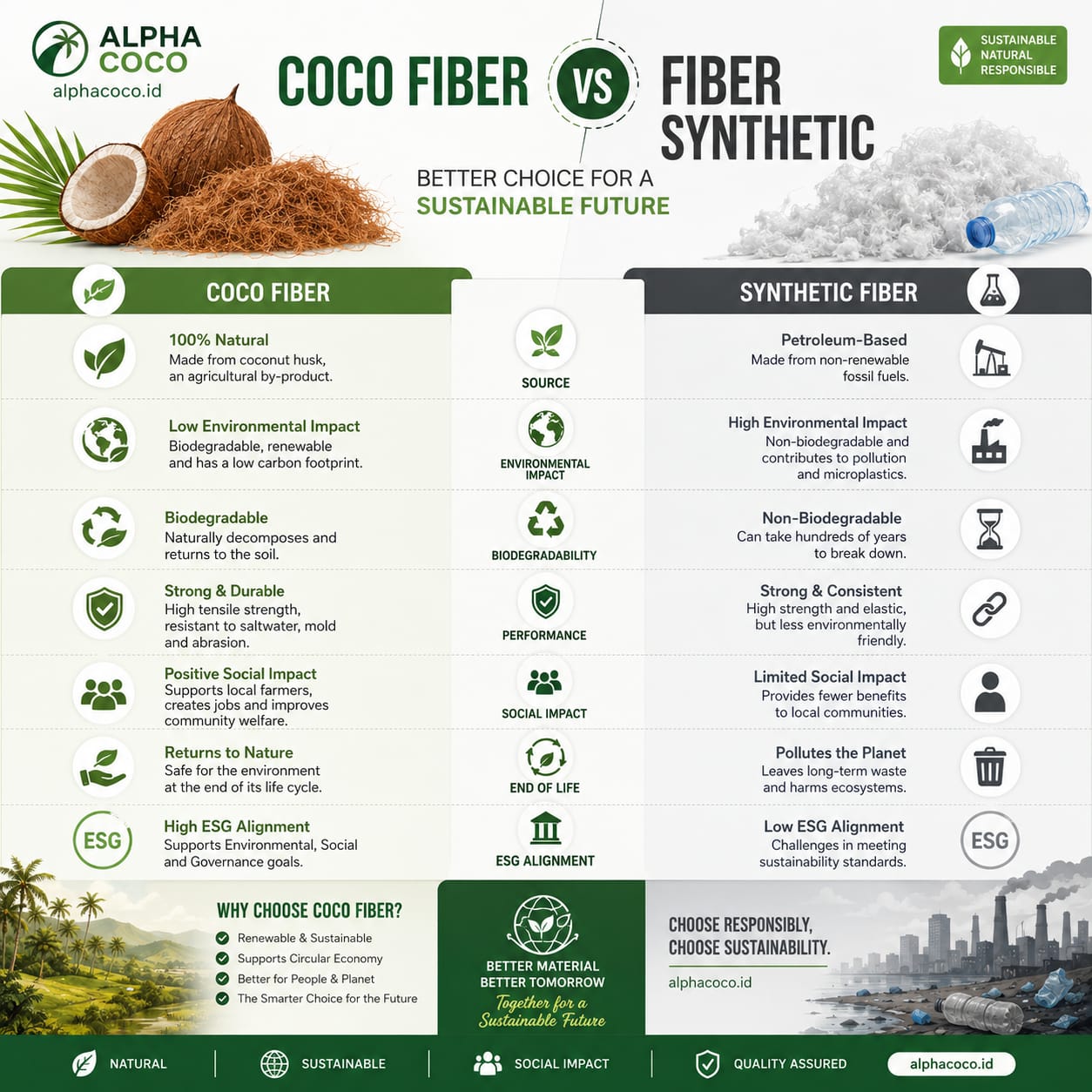
In today’s environmentally conscious world, industries are actively searching for materials that combine performance, affordability, and sustainability. One of the biggest comparisons emerging across agriculture, construction, automotive, geotextile, and packaging industries is coco fiber vs synthetic fiber.
As global demand for eco-friendly alternatives increases, natural coconut-based fibers are becoming a preferred solution for companies aiming to reduce environmental impact while supporting ESG (Environmental, Social, and Governance) commitments.
At Alpha Coco, we believe sustainable materials are not just a trend — they are the future of responsible business.
What is Coco Fiber?
Coco fiber, also known as coir fiber, is a natural fiber extracted from coconut husks. Indonesia, as one of the world’s largest coconut-producing countries, provides abundant raw materials for high-quality coco fiber production.


Coco fiber is widely used for:
- Geotextiles
- Erosion control mats
- Mattress and upholstery industries
- Automotive seat filling
- Brushes and ropes
- Hydroponic growing media
- Sustainable packaging materials
Because it comes from agricultural waste, coco fiber supports circular economy principles and reduces biomass disposal problems.
What is Synthetic Fiber?
Synthetic fibers are man-made materials produced primarily from petrochemicals. Common examples include:
- Polyester
- Nylon
- Polypropylene
- Acrylic
These fibers are widely used because they are lightweight, durable, and mass-produced at low cost. However, synthetic fibers are heavily dependent on fossil fuels and contribute significantly to microplastic pollution worldwide.


Coco Fiber vs Synthetic Fiber
1. Environmental Impact
Coco Fiber
Coco fiber is biodegradable, renewable, and environmentally friendly. Since it is derived from coconut husk waste, its production minimizes agricultural waste and supports resource efficiency.
Benefits include:
- Biodegradable material
- Low carbon footprint
- Renewable annually
- Supports waste reduction
- No microplastic pollution
Synthetic Fiber
Synthetic fibers are petroleum-based and can take hundreds of years to decompose.
Environmental concerns include:
- High carbon emissions
- Fossil fuel dependency
- Microplastic contamination
- Non-biodegradable waste accumulation
For companies focused on ESG compliance and sustainability reporting, coco fiber offers a much stronger environmental profile.
2. Sustainability & ESG Value
Environmental, Social, and Governance (ESG) standards are becoming increasingly important in global trade and investment decisions.


How Coco Fiber Supports ESG
Environmental
- Reduces agricultural waste
- Promotes biodegradable products
- Supports carbon reduction initiatives
Social
- Creates rural employment opportunities
- Supports local coconut farmers
- Encourages fair trade partnerships
Governance
- Traceable sourcing
- Ethical supply chain management
- Compliance with sustainable export standards
At Alpha Coco, we work closely with local suppliers and communities to ensure responsible sourcing and long-term sustainability.
3. Durability and Performance
Coco Fiber
Coco fiber has excellent durability for a natural material. It is resistant to saltwater, fungal growth, and bacterial damage.
Key properties:
- High lignin content
- Strong elasticity
- Good water retention
- Excellent aeration
These characteristics make coco fiber ideal for:
- Geotextiles
- Horticulture
- Erosion control
- Mattress manufacturing
Synthetic Fiber
Synthetic fibers generally offer:
- High tensile strength
- Lightweight properties
- Water resistance
- Uniform consistency
However, their environmental disadvantages are causing many industries to seek greener alternatives where possible.
4. Biodegradability
One of the biggest differences between coco fiber and synthetic fiber is end-of-life impact.
Coco Fiber
- Naturally decomposes over time
- Returns nutrients to soil
- Does not release toxic residues
Synthetic Fiber
- Can persist for centuries
- Releases microplastics into oceans and soil
- Contributes to long-term pollution
As governments worldwide implement stricter sustainability regulations, biodegradable materials are expected to dominate future markets.
5. Cost Efficiency
Synthetic fibers can sometimes appear cheaper in mass industrial production. However, the hidden environmental costs are increasingly significant.
Coco fiber provides long-term value through:
- Sustainable branding advantages
- ESG compliance
- Eco-conscious consumer appeal
- Renewable supply chain stability
Businesses adopting sustainable materials today are also strengthening their future market competitiveness.
Industries Switching to Coco Fiber
Many industries are transitioning toward natural fibers to meet sustainability goals.


Industries increasingly using coco fiber include:
- Agriculture & hydroponics
- Construction & geotextiles
- Automotive manufacturing
- Furniture & bedding
- Landscaping & erosion control
- Sustainable packaging
This shift is driven by both environmental awareness and growing global demand for renewable raw materials.
Why Indonesia is a Leading Coco Fiber Supplier
Indonesia is one of the world’s largest coconut producers, making it an ideal source for premium coco fiber products.
Advantages of Indonesian coco fiber:
- Abundant raw materials
- Competitive pricing
- Consistent supply capacity
- Strong export infrastructure
- Skilled coconut processing industry

The comparison between coco fiber vs synthetic fiber clearly highlights the growing importance of sustainable natural materials.
While synthetic fibers still dominate many industries, their environmental impact is becoming increasingly difficult to ignore. Coco fiber offers a renewable, biodegradable, and ESG-friendly alternative that aligns with the future of sustainable business.
As global industries move toward greener supply chains, coco fiber is positioned as one of the most promising eco-friendly materials available today.
Partner with Alpha Coco
Looking for reliable Indonesian coco fiber supplier solutions?
We provide sustainable coconut-based products for global industries with a commitment to quality, consistency, and environmental responsibility.