
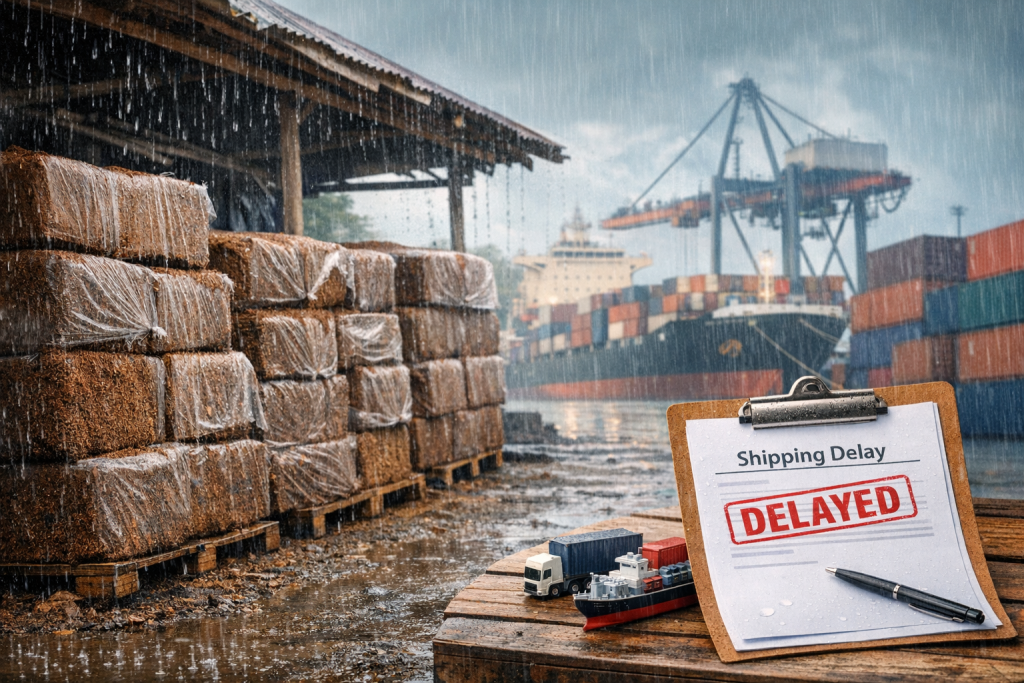
Understanding weather-related delays in the global cocopeat supply chain
As climate patterns continue to shift globally, prolonged rainfall has become a recurring challenge for many agricultural commodities. In the cocopeat industry, weather conditions play a critical role in production timelines, especially for suppliers that prioritize natural and quality-focused processing methods.
In this article, we explain how continuous rainfall impacts cocopeat production and shipping, why quality cannot be rushed, and how professional suppliers manage weather-related delays transparently.
Why Weather Matters in Cocopeat Production
Cocopeat is a natural growing medium produced from coconut husks. One of the most important stages in cocopeat processing is drying, which directly affects:
- Moisture content
- Product stability during long-distance shipping
- Consistency and performance for end users
Many producers use sun-drying as part of a sustainable and cost-efficient process. However, when rainfall continues for extended periods, drying cycles naturally take longer.
Impact of Prolonged Rainfall on Cocopeat Shipping
During continuous rainy seasons, several aspects of the cocopeat supply chain may be affected:
- Slower drying and moisture stabilization
- Extended quality control timelines
- Delayed container stuffing schedules
These delays can result in later shipment dates to certain destination countries, particularly those requiring long transit times such as Europe, the UK, and the Middle East.
It is important to note that these delays are quality-related, not caused by lack of raw materials or production capacity.
Why Shipping Cocopeat Too Early Is a Risk
Shipping cocopeat before it reaches optimal dryness can create serious issues during transit:
- Excess moisture increases container weight and shipping costs
- Risk of mold growth inside sealed containers
- Reduced shelf life and inconsistent performance upon arrival
For reputable suppliers, delaying shipment is often the most responsible decision to ensure buyers receive cocopeat that meets international standards.
Quality-First Approach: Transparency with Buyers
Professional cocopeat exporters understand the importance of communication. When weather conditions impact production schedules, buyers are informed early and clearly.
This transparency allows buyers to:
- Adjust planting schedules
- Plan inventory more accurately
- Avoid unexpected quality issues upon delivery
In the long term, open communication strengthens trust and builds stable supply partnerships.
How Cocopeat Producers Adapt to Climate Challenges
As weather variability increases, many cocopeat producers are implementing adaptive strategies, including:
- Covered and improved drying areas
- Hybrid drying systems combining sun and mechanical drying
- Flexible production planning based on seasonal patterns
These investments help reduce risk while maintaining product quality, especially for export-grade cocopeat.
What Buyers Should Expect Going Forward
Weather-related delays are becoming part of the global agricultural landscape. Reliable cocopeat suppliers are not those who promise unrealistic timelines, but those who deliver:
- Consistent quality
- Honest communication
- Long-term supply reliability
Understanding these realities helps buyers build more resilient sourcing strategies.
Conclusion
Prolonged rainfall can temporarily slow down cocopeat shipping, but it does not compromise the value or reliability of the product when managed correctly. On the contrary, it highlights the importance of responsible production practices and transparent supplier-buyer relationships.
In a changing climate, quality, trust, and long-term commitment matter more than speed alone.