
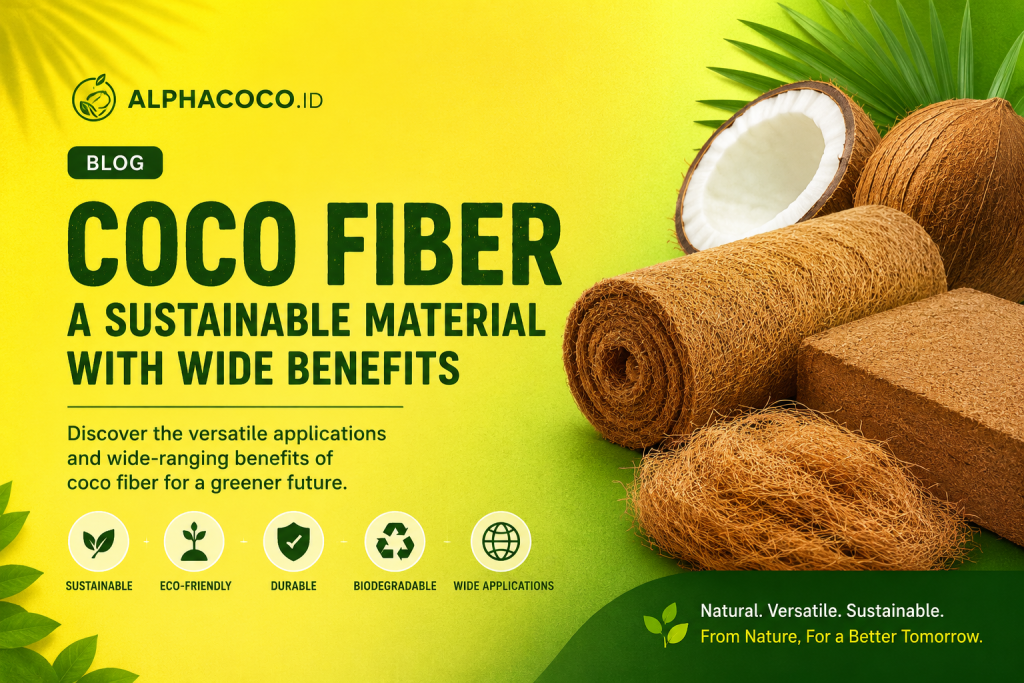
Coco Fiber: A Sustainable Material Supporting ESG and Global Industries
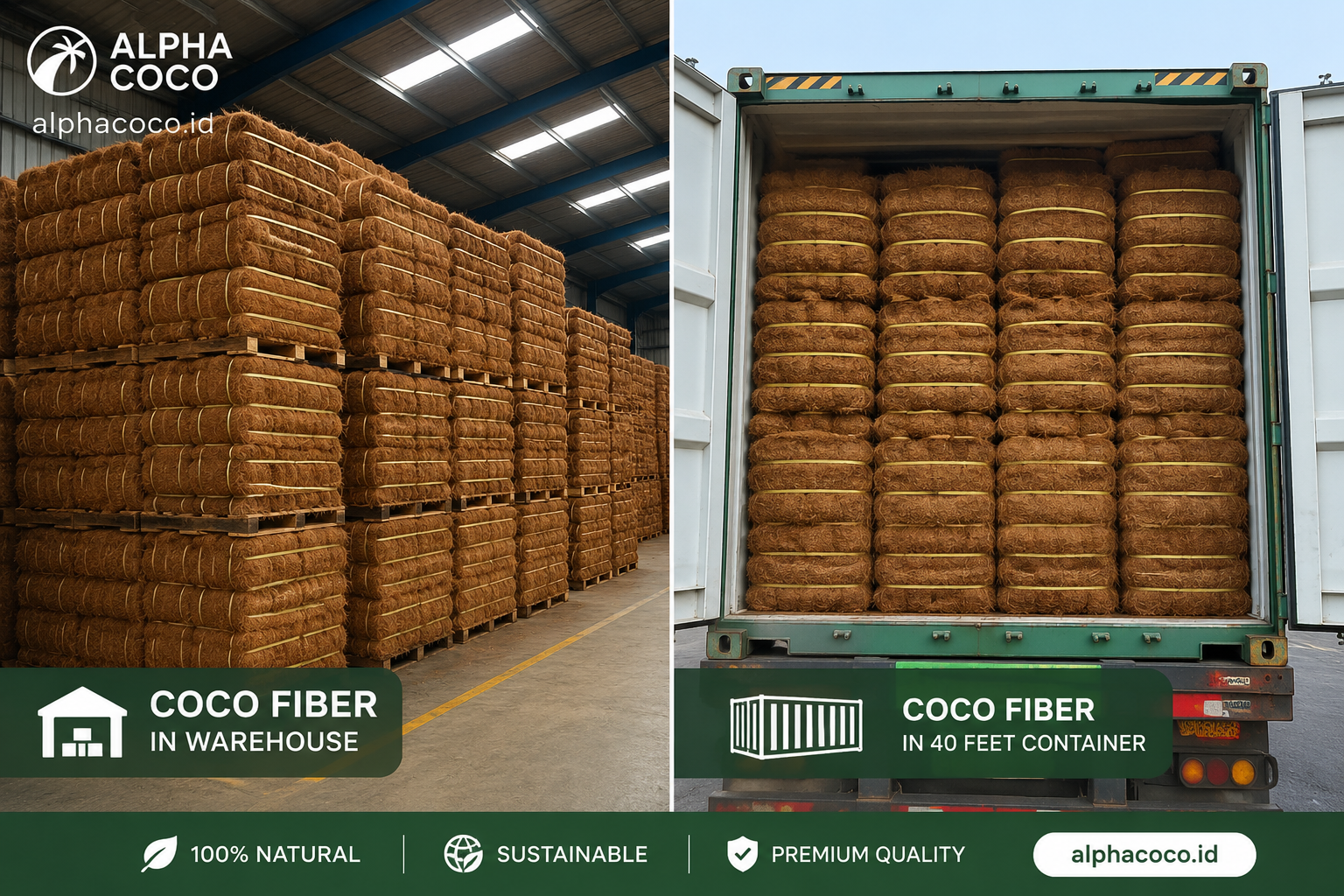
As industries worldwide shift toward sustainability and environmentally responsible operations, coco fiber has become one of the most valuable natural materials for the future. Derived from coconut husks, coco fiber offers not only wide industrial applications but also strong Environmental, Social, and Governance (ESG) value for companies aiming to build sustainable supply chains.
At AlphaCoco, we believe coconut-based products are more than commodities — they are part of a long-term sustainable solution that supports both business growth and positive environmental impact.
What is Coco Fiber?
Coco fiber, also known as coir fiber, is a natural fiber extracted from the outer husk of coconuts. What was once considered agricultural waste is now transformed into a high-value industrial material used across agriculture, construction, automotive, furniture, geotextiles, and eco-friendly manufacturing sectors.
Coco fiber is recognized globally for its:
- High durability
- Excellent water retention
- Natural resistance to saltwater
- Strong cushioning properties
- Biodegradable composition
- Renewable and sustainable sourcing
These characteristics make coco fiber one of the leading eco-friendly alternatives to synthetic materials.
Coco Fiber and ESG Sustainability
Today, global buyers, investors, and corporations increasingly prioritize ESG (Environmental, Social, and Governance) standards when selecting suppliers and raw materials.
Coco fiber strongly aligns with ESG principles because it contributes to environmental sustainability, social empowerment, and responsible business development.
Environmental Impact (E)
1. Reducing Agricultural Waste
Millions of coconut husks are discarded every year. By converting coconut waste into industrial products, coco fiber helps reduce landfill waste and supports circular economy practices.
2. Biodegradable Alternative to Synthetic Materials
Unlike plastic-based fibers and synthetic industrial materials, coco fiber naturally decomposes without polluting ecosystems. This helps industries reduce long-term environmental impact.
3. Lower Carbon Footprint
Natural fiber processing generally consumes less energy than petroleum-based synthetic manufacturing, helping reduce carbon emissions across supply chains.
4. Supporting Sustainable Agriculture
Coco fiber products such as grow bags and planting media improve water retention and reduce excessive water usage in agriculture and hydroponic farming.
Social Impact (S)
The coco fiber industry creates significant opportunities for rural communities, especially in coconut-producing regions like Indonesia.
Positive Social Contributions Include:
- Job creation for local farmers
- Income opportunities for rural communities
- Development of small-scale processing industries
- Empowerment of local labor and cooperatives
- Improvement of local economic resilience
By developing value-added coconut products, communities gain better economic opportunities from materials previously treated as waste.
This creates a more inclusive and sustainable rural economy.
Governance & Responsible Business (G)
Responsible sourcing and transparent supply chains are becoming essential requirements for international buyers.
At AlphaCoco Official Website, we are committed to:
- Ethical sourcing practices
- Sustainable production development
- Long-term partnerships with local communities
- Quality consistency for global export markets
- Environmentally responsible business operations
Strong governance practices help ensure reliable production, international buyer confidence, and long-term business sustainability.
Wide Applications of Coco Fiber
1. Agriculture & Hydroponics
Coco fiber is widely used as:
- Hydroponic growing media
- Soil conditioner
- Organic farming support
- Greenhouse cultivation media
Its water retention and aeration capabilities improve root development and crop performance.
2. Mattress & Furniture Industry
Coco fiber is increasingly used in eco-friendly furniture and bedding products because of its:
- Natural elasticity
- Durability
- Air circulation
- Sustainable composition
Many premium mattress manufacturers now prefer natural coir materials over synthetic foam.
3. Automotive Industry
Automotive manufacturers utilize coco fiber for:
- Seat padding
- Interior insulation
- Door panel composites
- Sound absorption materials
Natural fibers help reduce vehicle weight while supporting sustainable manufacturing initiatives.
4. Erosion Control & Geotextiles
Coco fiber geotextiles are highly effective for:
- Soil erosion prevention
- Riverbank stabilization
- Slope reinforcement
- Land rehabilitation
- Reforestation projects
Because coco fiber naturally decomposes over time, it supports vegetation growth while protecting soil structure.
5. Industrial Products
Coco fiber is also used in:
- Ropes
- Brushes
- Brooms
- Mats
- Nets
- Packaging materials
Its durability and moisture resistance make it suitable for outdoor and marine applications.
Why Global Buyers Choose Coco Fiber
International demand for coco fiber continues to grow because companies increasingly seek sustainable raw materials that align with ESG goals.
Key advantages include:
- Eco-friendly sourcing
- Renewable raw material
- Cost efficiency
- Biodegradable properties
- Industrial versatility
- ESG compliance support
- Sustainable supply chain integration
As sustainability becomes a global business priority, coco fiber is positioned as one of the most promising natural industrial materials of the future.
AlphaCoco Commitment to Sustainability
At AlphaCoco Indonesia, we are committed to transforming Indonesia’s abundant coconut resources into premium export-quality products while supporting environmental responsibility and rural economic empowerment.
We aim to deliver sustainable coconut solutions that create value for global industries, local communities, and future generations.
ALPHACOCO.ID
Turning Coconut Waste into Sustainable Global Solutions