
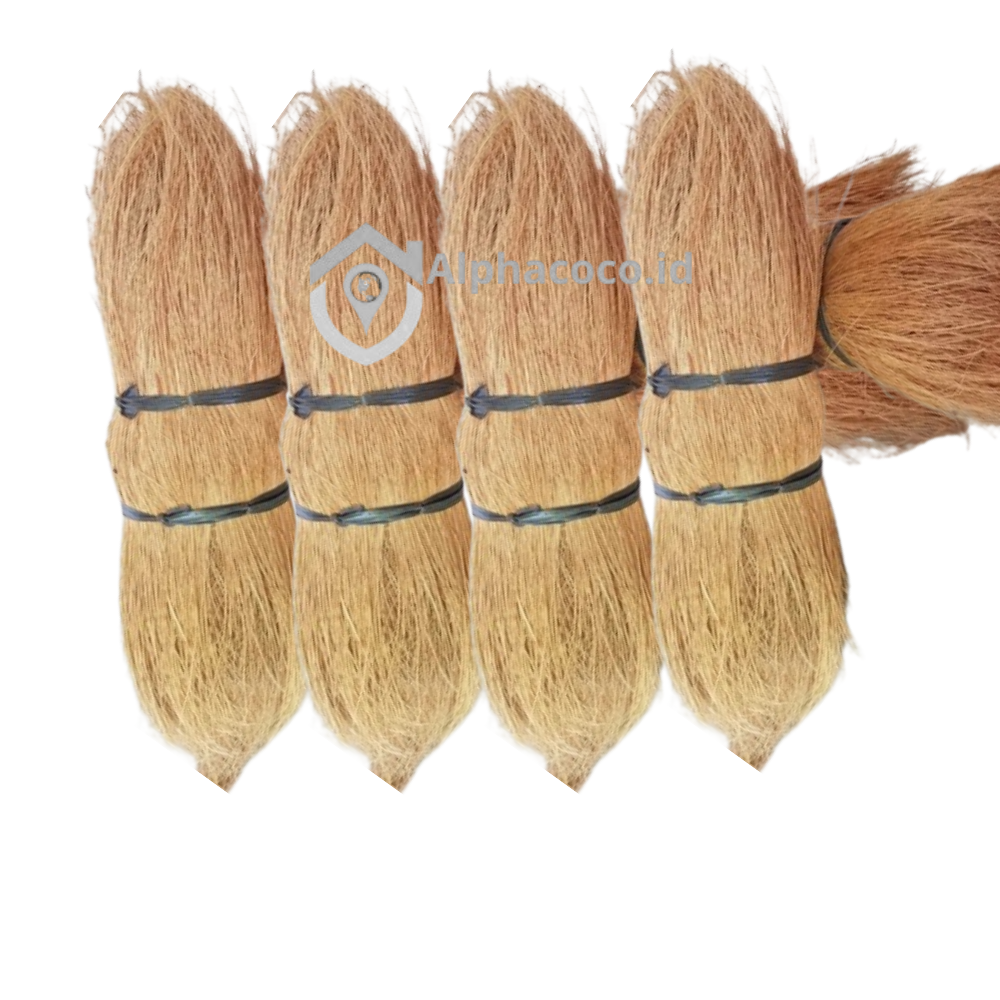
Coco Bristle: The Natural Fiber for Durable and Eco-Friendly Brushes
Coco bristle, also known as coconut bristle fiber, is a stiff and resilient natural fiber extracted from the outer husk of mature coconuts. This fiber is widely used in the production of brushes, brooms, and industrial cleaning tools thanks to its natural strength, stiffness, and resistance to moisture.
As global industries move toward sustainable and eco-friendly materials, coco bristle has become an increasingly popular alternative to synthetic fibers, offering both durability and environmental safety.
What is Coco Bristle?
Coco bristle is made from coir fibers found in the outer shell of coconuts. These fibers are naturally strong, stiff, and slightly coarse, making them ideal for cleaning and scrubbing applications.
Unlike synthetic materials, coco bristle is 100% biodegradable, renewable, and non-toxic, ensuring that its use leaves no harmful impact on the planet — or on humans and animals.
Key Advantages of Coco Bristle
1. 100% Natural and Eco-Friendly
Coco bristle is produced from coconut husks, a renewable agricultural byproduct. It is fully biodegradable and free from harmful chemicals, making it an ideal choice for environmentally responsible manufacturers.
2. Strong, Stiff, and Long-Lasting
The natural stiffness of coco bristle provides excellent cleaning performance and durability, maintaining its shape even after frequent use. It’s suitable for heavy-duty brushes, floor scrubbers, and outdoor brooms.
3. Water and Heat Resistant
Coco bristle is naturally resistant to both water and heat. It doesn’t soften easily when wet and can withstand warm environments, which ensures consistent performance across various conditions.
4. Safe and Non-Toxic Material
Coco bristle is a completely natural fiber with no synthetic coatings, no microplastics, and no chemical additives.
It is non-toxic and safe, even if accidentally ingested by children or pets in small amounts, because it is made of pure plant fiber (cellulose and lignin) that is not harmful to the body.
However, while it is non-poisonous, coco bristle is not meant to be eaten due to its coarse texture — it may cause minor discomfort if swallowed in large quantities. This makes it one of the safest natural materials for eco-friendly brush manufacturing.
5. Economical and Widely Available
With coconuts abundantly produced in Indonesia, India, Sri Lanka, and the Philippines, coco bristle is affordable and consistently available, ensuring a steady supply for export markets worldwide.
6. Versatile Industrial Applications
Coco bristle is used in:
Household and industrial brushes
Outdoor brooms and scrubbers
Doormats and carpets
Cushion and upholstery filling
Rope and twine production
How Coco Bristle Is Produced (Dry Mechanical Process)
Unlike other coir products that require soaking or washing, coco bristle is processed dry, preserving its natural stiffness and strength. Here’s the typical production process:
1. Husk Selection and Drying
Mature coconut husks are selected for their long and coarse fibers. They are cleaned and sun-dried naturally to remove moisture.
2. Fiber Extraction
The dried husks are processed using a defibring machine, which separates long, stiff fibers (coco bristle) from shorter fibers and dust.
3. Dry Cleaning
No water or chemicals are used. Instead, the fibers are mechanically cleaned with trommel or shaking machines to remove dust and debris while keeping the bristle dry and stiff.
4. Combing and Sorting
The cleaned fibers are combed and sorted by length and color. Standard lengths range between 10–25 cm, depending on buyer requirements.
5. Bundling and Packaging
Finally, the fibers are tightly bundled into 100–125 kg bales for shipment. Before export, the bales often undergo fumigation and quality checks to meet international standards, particularly for markets like Australia, Korea, and Japan.
Safety and Environmental Benefits
Coco bristle is a zero-waste, eco-safe product:
Non-toxic and chemical-free
Safe for humans, pets, and the environment
Contains no microplastics or synthetic binders
Biodegradable and compostable after disposal
Its natural composition ensures that even if small fibers are accidentally released into the environment, they break down naturally without polluting water or soil — unlike synthetic bristles.
Why Choose Coco Bristle for Sustainable Manufacturing
Every part of the coconut is valuable — cocopeat for soil improvement, coir fiber for mats and ropes, and coco bristle for brushes. By using coco bristle, industries not only gain a high-quality, renewable resource, but also contribute to reducing plastic waste and supporting sustainable livelihoods in coconut-producing countries.
Coco bristle is a powerful example of nature’s efficiency — strong, biodegradable, and completely safe for people and the planet. Whether used in industrial brushes, household brooms, or eco-friendly cleaning products, it delivers excellent performance without environmental compromise.
As demand for green, safe, and natural materials continues to rise, coco bristle from Indonesia and other tropical nations stands out as a leading choice for sustainable brush manufacturing worldwide.
Coco bristle
Coconut bristle fiber
Non-toxic natural fiber
Coconut coir bristle Indonesia
Eco-friendly brush material
Biodegradable fiber for brushes
Coconut husk fiber exporter
Sustainable natural bristle
Safe and chemical-free brush fiber